— THE RESIDENCIES —
This year we are focusing on the topic of Hyperlocality as a way of thinking about data, networks, and technologies related to matters of closeness and the personal. Hyperlocality examines how we might encode information about our natural surroundings within our homes and bodies, and explores what this form of archiving might be representing. Hyperlocality might imply working with a very specific dataset, or building technologies that operate in a very situated environment, off-the-cloud, or even off-the-grid. Hyperlocality might also mean zooming in and out between planetary concerns and situated and grounded experiences. The goal is to create connections (between people, projects, and spaces) and build a vocabulary of commons. We envision projects that explore the creation of artifacts, materials and processes of any medium (multidisciplinary practices are encouraged). We invite thought-provoking juxtapositions of data and interpretation, foregrounding practices and projects that offer critical and alternative perspectives.
The residency is hosted in an academic setting (at University of Washington, Seattle, USA) so there is a possibility to work with students in art and design. The last week will involve public sharing of the project (including a talk). There will be opportunities to exhibit the work on campus (i.e. at the DXARTS gallery, the UW Bio Greenhouse, or the UW Planetarium).
What we offer:
- Shared studio space
- Access to fabrication equipment
- A small budget for materials
- Exhibition space
Payment and support:
The residency includes:
- $7000 total (including honorarium, airfaire and accommodation)
Timeline:
We will host 2 residencies (1 month long). Residencies will take place in Spring 2026 (starting April 1st until May 31st).
Proposals are due: January 10, 2026
Decisions sent out: February 1, 2026
Location:
Seattle, Washington
University of Washington, DXARTS SoftLab and Studio Tilt, in the Art Building.
Dissemination of the project:
At the end of the residency, we envision publishing the project on our labs websites and in print zine format (adding to our growing collection of zines on the topic of Soft Data and Common Wares).
Who is eligible?
- Artists, designers, performers, creative researchers.
- US citizens, because of funding constraints
— HOW TO APPLY —
Please submit (use this link: https://forms.gle/QmANikNrHsKRekvo6):
- A proposal for the project (max 1000 words, and feel free to include sketches or diagrams for visual support). The proposal should include a description, project objectives, technical needs, materials envisioned.
- A rough timeline of how you plan to spend your 4 weeks of residency.
- A CV.
- A link to your portfolio
For any questions, please contact Afroditi Psarra (apsarra@uw.edu) or Audrey Desjardins (adesjard@uw.edu)
— PAST RESIDENCIES AND OUTCOMES —
In spring 2024, we hosted two Soft Data and Common Wares residencies:
An Archive of Witch Fever
by Xiaowei Wang
What forms of technology and computation will survive the salt water of the ocean, the torrent of a typhoon, the salt water of our tears? Witch Fever is a research based art project at the intersection of climate crisis, colonialism and violent beauty. The project elegantly combines printed textile pieces, speculative botany, textiles as archives, colonial histories, and practices of repair.

README_Paz-Server.txt
by Mark A. Hernandez Motaghy
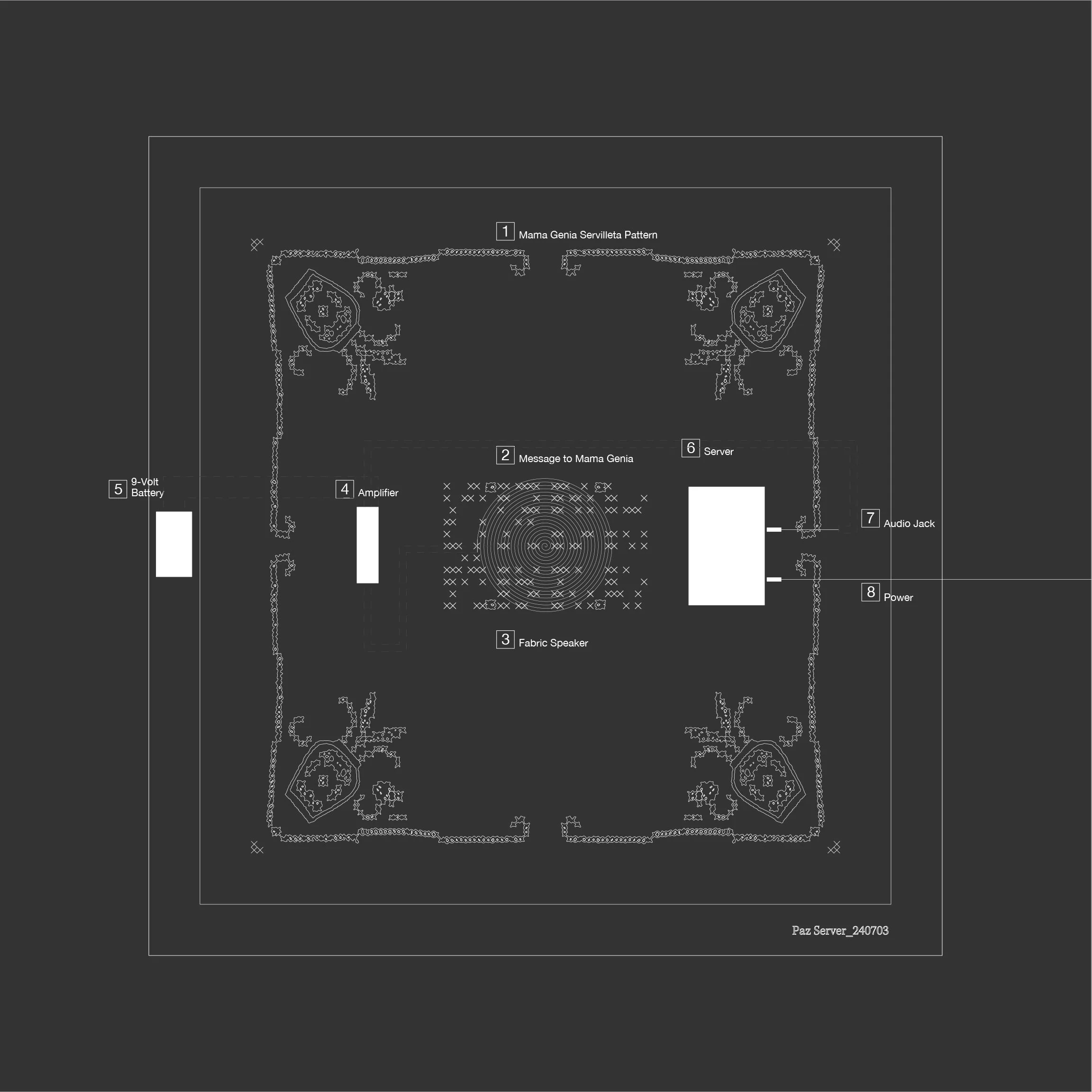
Paz Server is a trans-local, offline family database configured in the present and alive in the future. Server v.2024.07 houses the oral histories of Nena and Tía Martha. Its ongoing configurations are contingent on its situatedness in the family LAN/dscape across Chumash, Tongva, and Chichimeca territories, or so called [REDACTED], Los Angeles, California and [REDACTED], Colima, Mexico.